
Special Cautions to Ensure the Safe Disposal of Sodium-filled Exhaust Valves (SR20DE & SR20DET engines) (Cont'd)
EM-5prose procedureApplies to SR20DE & SR20DET engines only (sodium-filled exhaust valves).
PRECAUTIONS
Special Cautions to Ensure the Safe Disposal of Sodium-filled Exhaust Valves (SR20DE & SR20DET engines) (Cont'd)
Safe Disposal of Sodium-filled Exhaust Valves
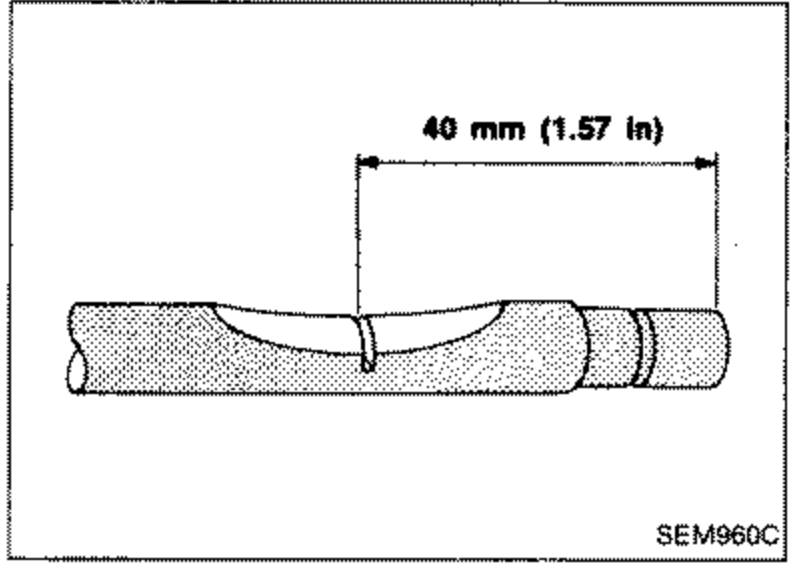
- 3Use a hacksaw to cut through approximately half the diameter of the valve stem. Make the serration at a point 40 mm (1.57 in) from the end of the stem.
 SEM960C
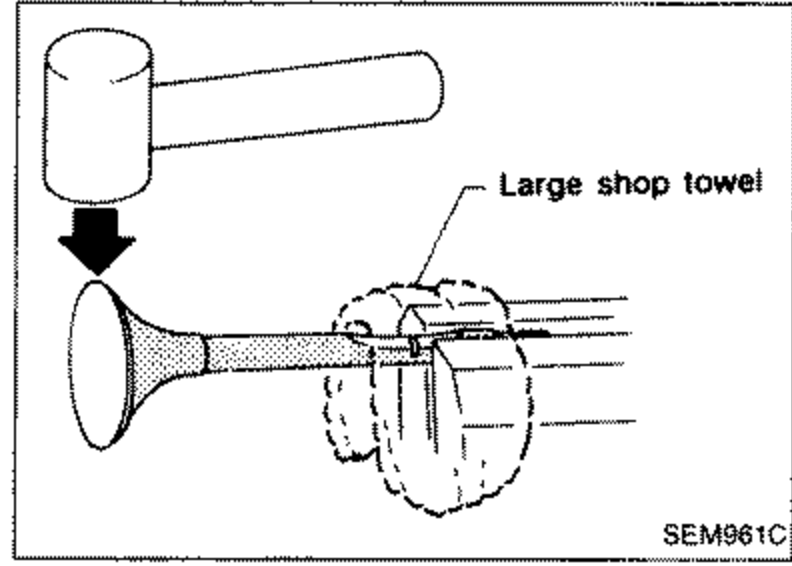
 - 4Cover the serrated end of the valve with a large shop towel. Strike the valve face end with a hammer, separating it into two pieces.
 SEM961C
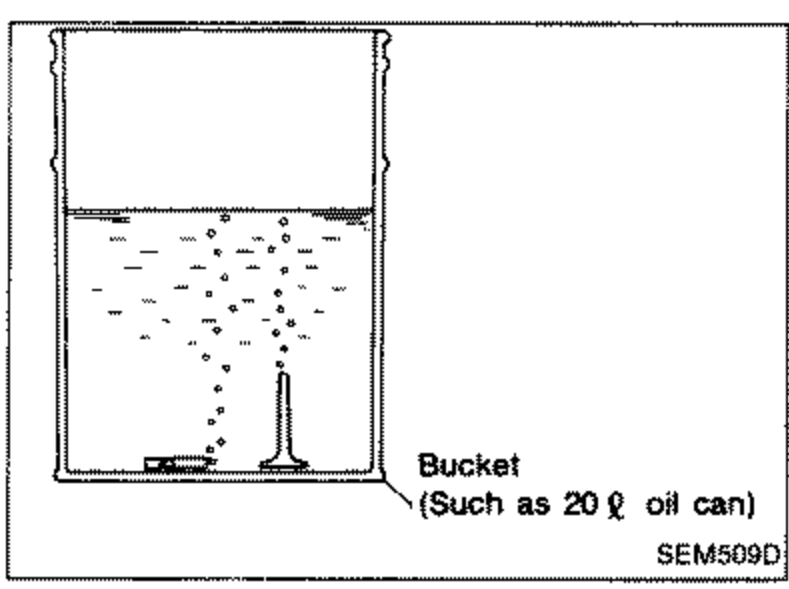
 - 5Fill a bucket (such as a 20 ℓ oil can) with at least 10 ℓ (2-1/4 Imp gal) of water. Carefully place the already-cut (serrated) valves into the water one-at-a-time using a set of large tweezers and quickly move away at least 2.7 m (9 ft). The valves should be placed in a standing position as shown in the illustration to allow complete reaction of the sodium with the water. The major portion of the resultant chemical reaction lasts 1 to 2 minutes. After the bubbling action has subsided, additional valves can be placed into the bucket allowing each subsequent chemical reaction to subside. However, no more than 8 valves should be placed in the same 10 ℓ (2-1/4 Imp gal) amount of water. The complete chemical reaction may take as long as 4 to 5 hours. Remove the valves using a set of large tweezers after the chemical reaction has stopped. Afterwards, the valves can be mixed with ordinary scrap metal.
 SEM509D
CAUTION
Make sure the resultant (high alkalinity) waste water does not contact your skin. If the waste water does contact you, wash the contacted area immediately with large quantities of water.
Dealers should check their respective country and local regulations concerning any chemical treatment or waste water discharge permits which may be required to dispose of the resultant (high alkalinity) waste water.