
Carburetor - Fuel Level / Automatic Choke
EF & EC-164prose procedureApplies to GA13DS, GA14DS & GA16DS carbureted engines.
Fuel Level
INSPECTION
Place vehicle on a level surface. With engine idling, check fuel level.
ADJUSTMENT
Fuel Level Adjustment
- 1Remove carburetor from engine.
- 2Remove choke chamber from carburetor.
- 3Turn choke chamber upside down, and fix it horizontally.
- 4Raise float fully, then lower it slowly until float seat contacts needle valve, and in this position, check height "H1". If out of specification, adjust by bending float seat. Make sure needle valve slides smoothly on float seat.Height "H1": 9.5 - 10.5 mm (0.374 - 0.413 in)
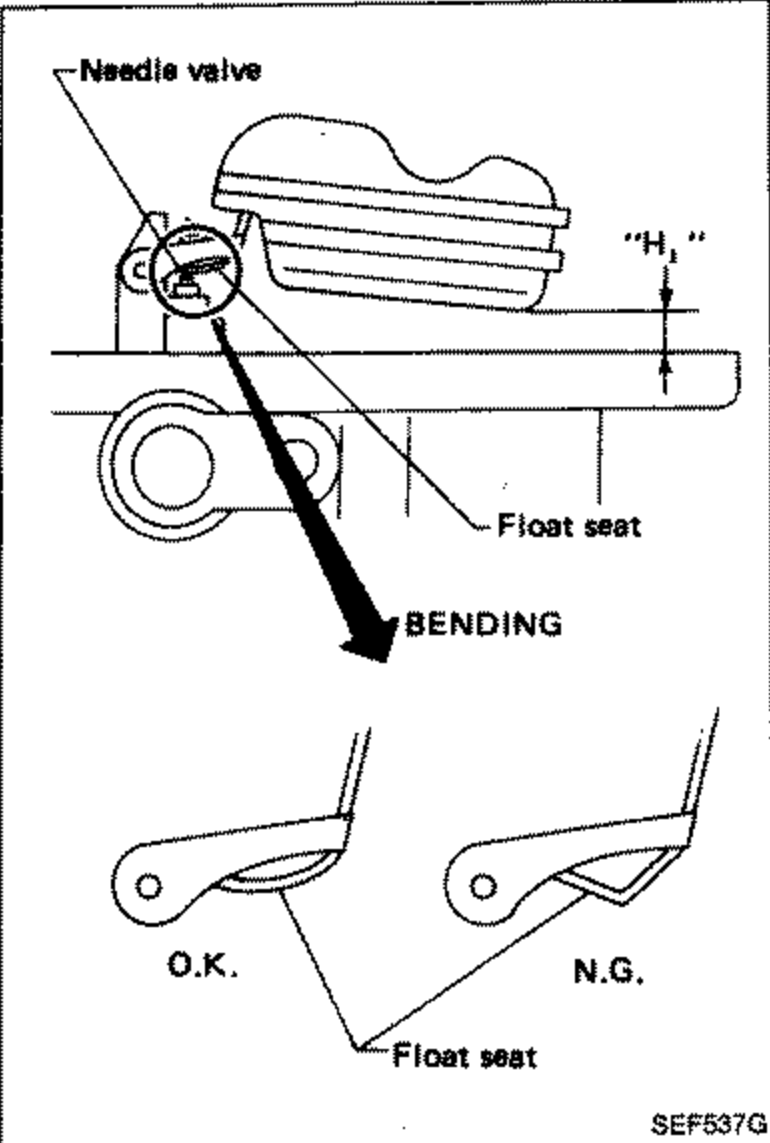 SEF537G
 - 5Lower float slowly until float stopper contacts carburetor, and in this position, check height "H2". If out of specification, adjust by bending float stopper.Height "H2": 43.0 - 44.0 mm (1.693 - 1.732 in)
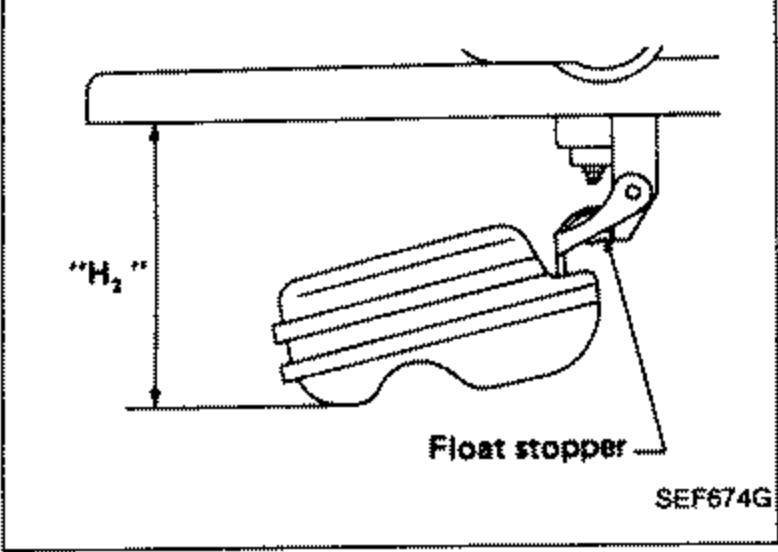 SEF674G
 - 6Install choke chamber and then place carburetor on engine.
- 7Perform "FUEL LEVEL INSPECTION".
| Specification | Value |
|---|---|
| Height "H1"0.374 - 0.413 in | 9.5 - 10.5mm |
| Height "H2"1.693 - 1.732 in | 43.0 - 44.0mm |
Height "H1"0.374 - 0.413 in
9.5 - 10.5mm
Height "H2"1.693 - 1.732 in
43.0 - 44.0mm
Automatic Choke
MECHANICAL CHECK
Automatic Choke Mechanical Check
- 1Before starting engine, fully open throttle valve and ensure that choke valve closes properly.
- 2Push choke valve with your finger to check for smooth movement.
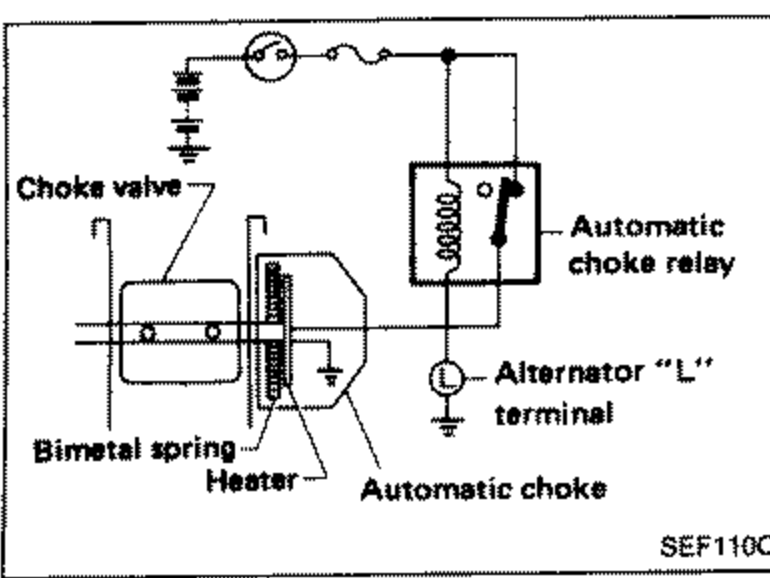 SEF110C
See also
FUEL LEVEL INSPECTION