
Checking Ignition Wire / Checking P.C.V. System / Checking A.T.C. Air Cleaner
MA-48prose procedureChecking Ignition Wire (High Tension Wire)
- 1Inspect ignition wires for cracks, damage, burned terminals and proper fit.
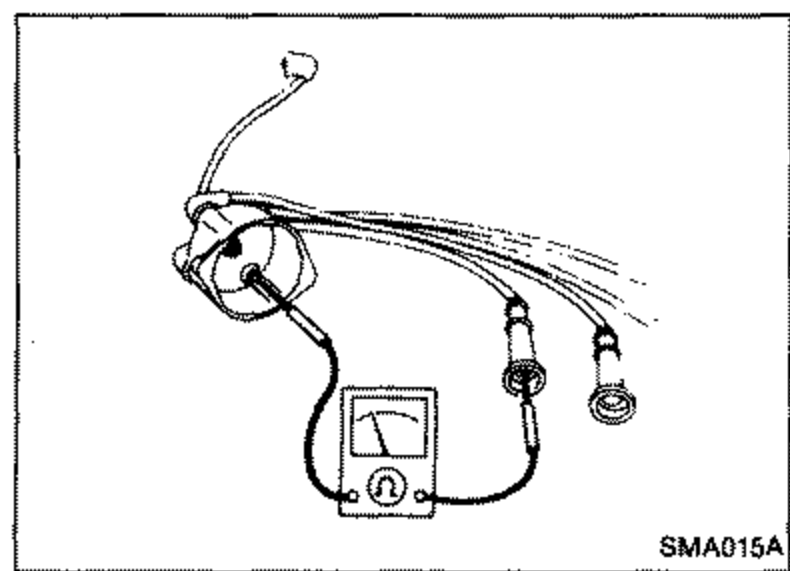
- 2Measure the resistance of ignition wires by shaking them and checking for intermittent breaks. Resistance: Less than 30 kΩIf N.G., replace with new ones.
 SMA015A
Checking Positive Crankcase Ventilation (P.C.V.) System
CHECKING P.C.V. VALVE
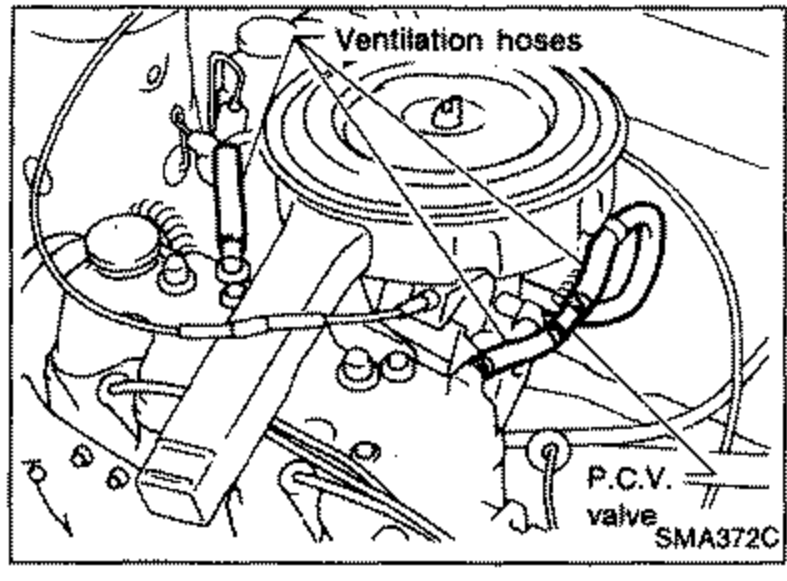
With engine running at idle, remove ventilation hose from P.C.V. valve; if valve is working properly, a hissing noise will be heard as air passes through it and a strong vacuum should be felt immediately when a finger is placed over valve inlet.
Checking Ventilation Hoses
- 1Check hoses and hose connections for leaks.
 SMA372C
 - 2Disconnect all hoses and clean with compressed air. If any hose cannot be freed of obstructions, replace.
Checking Automatic Temperature Control (A.T.C.) Air Cleaner
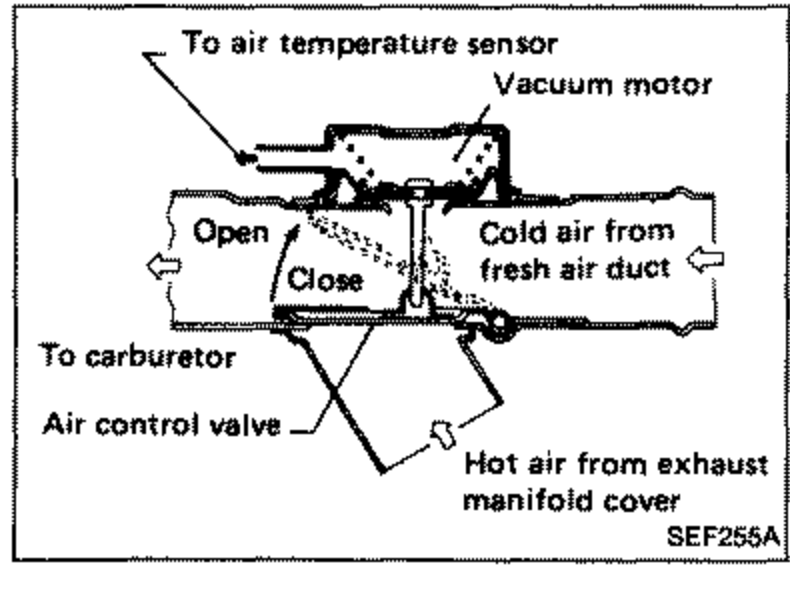
- 1Check that vacuum hoses (Intake manifold to temperature sensor and vacuum motor) are securely connected.
 SEF255A
 - 2Inspect each hose for cracks or distortion.
- 3Inspect A.T.C. system for proper function.
- 4Make sure that air control valve moves when engine is raced under no-load.
- 5Make sure that air control valve gradually closes when engine warm-up advances.Refer to section EF & EC.
A.T.C. air control valve function
Stopped
TemperatureAny
Air control valve positionClosed
Intake air temperature—
At idle
TemperatureLow
Air control valve positionOpen
Intake air temperatureHot
At idle
TemperatureHigh
Air control valve positionClosed
Intake air temperatureCool