
Precautions (continued) — Catalyst, Turbocharger, Asbestos
GI-4prose procedureTurbocharger precautions apply to SR20DET variant. Asbestos instructions based on UK and Republic of Ireland regulations.
Precautions for Catalyst
IMPORTANT
If a large amount of unburned fuel flows into the converter, the converter temperature will be excessively high. To prevent this, follow the procedure below:
Precautions for Catalyst
- 1Use unleaded gasoline only. Leaded gasoline will seriously damage the catalytic converter.Leaded gasoline will seriously damage the catalytic converter.
- 2When checking for ignition spark or measuring engine compression, make tests quickly and only when necessary.
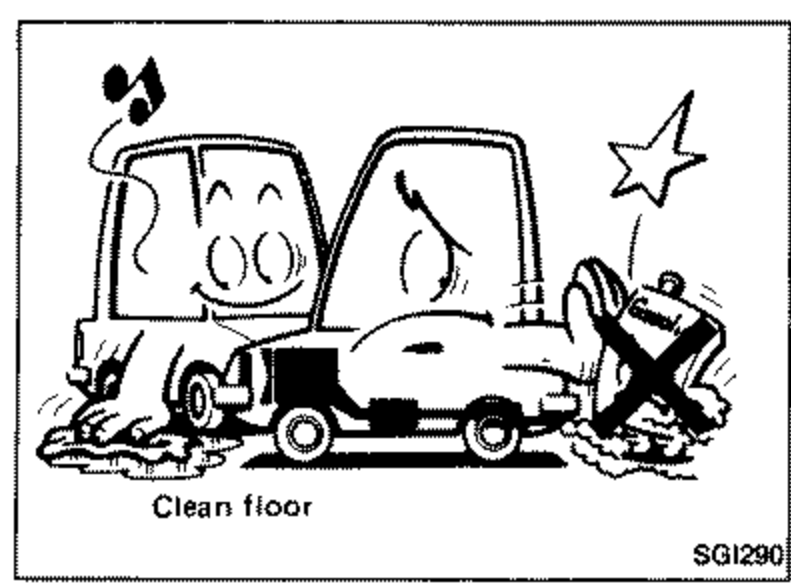
- 3Do not run engine when the fuel tank level is low, otherwise the engine may misfire causing damage to the converter.
- 4Do not place the vehicle on inflammable material. Keep inflammable material off the exhaust pipe.
 SGI290
Precautions for Turbocharger
IMPORTANT
The turbocharger turbine revolves at extremely high speeds and becomes very hot. Therefore, it is essential to maintain a clean supply of oil flowing through the turbocharger and to follow all required maintenance instructions and operating procedures. For proper operation of the system, follow the procedure below.
Precautions for Turbocharger
- 1Always use the recommended oil. Follow the instructions for proper time to change the oil and proper oil level.
 SGI292
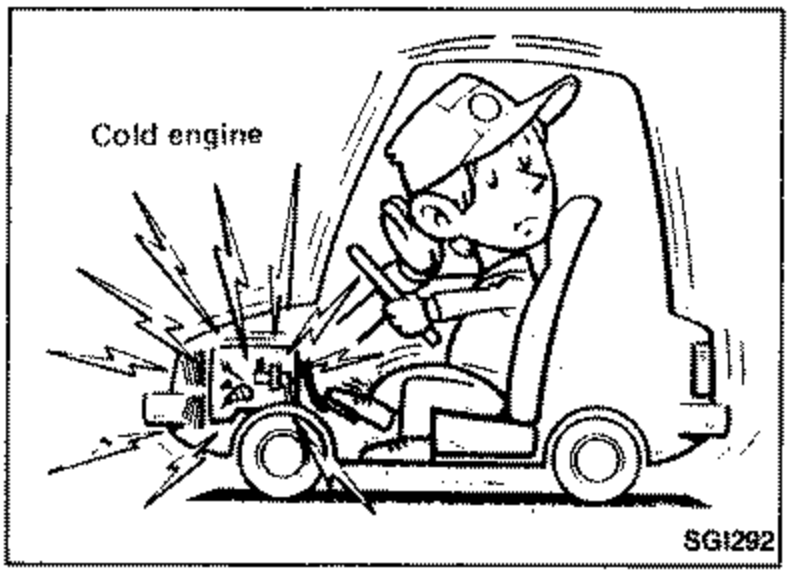
 - 2Avoid accelerating engine to a high rpm immediately after starting.
- 3If engine had been operating at high rpm for an extended period of time, let it idle for a few minutes prior to shutting it off.
Asbestos Safety Instructions (Based on United Kingdom and Republic of Ireland regulations)
WARNING
This vehicle uses parts containing asbestos. Most are not hazardous but Brake and Clutch linings can be. Consult the manufacturer or his agent for further details. When working with these please observe the "Garage Workers' Asbestos Code" available through your Nissan Dealer, Local Authority or Health and Safety Executive. In particular, work in a well-ventilated place using, where possible, appropriate dust extraction equipment, and avoid creating dust. Dampen all asbestos/dust where possible prior to machining, cutting, cleaning, etc. Use only hand or low speed tools.
Dispose of all asbestos waste, wet rags, etc., in a closed container as directed by your local waste disposal authority.